
We’re excited to partner with PainChek, the world’s first AI-powered pain assessment tool, to help care providers think pain first, ensuring the next steps of care are the right ones. This powerful tool makes it easier to detect, track and manage pain especially for those who struggle to communicate their discomfort, such as people living with dementia.
Now integrated with QCS, PainChek enables faster, smarter and more consistent pain assessments, improving care outcomes, reducing risk and enhancing overall well-being.
* from using the PainChek app, weight loss and falls were reduced by 30%, while safeguarding incidents dropped by 91% (Cheryl Baird – Director of Care and Compliance Orchard Care)
What is PainChek?
PainChek is a regulatory-approved medical device that helps carers assess and monitor pain levels accurately in any environment.
It’s designed for people who:
✅ Can’t reliably communicate their pain (e.g., those living with dementia or other cognitive impairments)
✅ Can self-report pain using a standard pain scale
✅ Switch between the two
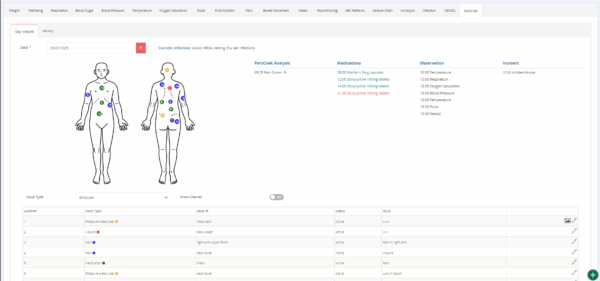
Using AI and facial analysis technology, PainChek automatically detects facial pain indicators, combining them with other non-facial pain cues observed by care providers. This generates a complete, accurate pain score in seconds, allowing for informed and timely intervention.
What This Means for QCS Customers
Our PainChek integration makes pain management a part of daily care:
- Start a new PainChek assessment directly from your QCS care plans
- Align with QCS policies that ensure pain-first thinking is embedded into compliance frameworks
- View pain scores & history alongside other care information in one place

Track pain trends over time to spot patterns & adjust care accordingly
By integrating your Care Planning and Policies with QCS & PainChek, care teams can embed a “think pain first” approach into everyday practice. This ensures pain is not only recognised but proactively managed to improve care outcomes.
✅ Ensure pain is properly identified & managed, even for those who can’t communicate
✅ Make quicker, more informed care decisions with real-time pain scores
✅ Half the doses of ‘when needed’ medicines by correctly identifying areas of pain first
✅ Reduce safeguarding risks by 90%
✅ Reduce stress for care providers by simplifying pain assessment & record-keeping
✅ Demonstrate compliance with clear, consistent pain data supporting funding applications