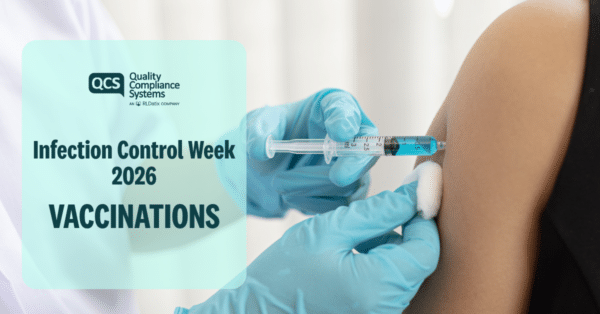
During International Infection Control Week this October we are looking at:
THE IMPORTANCE OF VACCINATIONS
Vaccines are the most effective way to prevent many infectious diseases.
- They prevent millions of deaths worldwide every year
- Vaccines teach the immune system how to create antibodies that protect it from diseases
- Since vaccines were introduced in the UK, diseases like smallpox, polio and tetanus that used to kill or disable millions of people are either gone or are now very rarely seen
- Diseases like measles and diphtheria have reduced to a very low number of cases each year since vaccines were introduced
- If people stop having vaccines, it is possible for infectious diseases to quickly spread again
Vaccines
- Help to protect adults and children from many serious and potentially deadly diseases
- Protect other people, by helping to stop diseases spreading to people who cannot have vaccines, such as babies too young to be vaccinated and those who are too ill to be vaccinated
- Undergo rigorous safety testing before being introduced; they are also constantly monitored for side effects after being introduced
- Reduce or even get rid of some diseases if enough people are vaccinated
- DO NOT overload or weaken the immune system; it is safe to give children and adults several vaccines at a time and this reduces the amount of injections needed
- DO NOT contain mercury
- DO NOT contain any ingredients that cause harm
- DO NOT cause autism
Childhood Vaccinations
There is a schedule of vaccinations for babies and for children aged 1 to 15 available on the NHS. They protect children against ill health and death from preventable diseases.
Vaccines for Pregnant Women
While pregnant, your immune system is weaker; this means you have a higher chance of picking up bacterial and viral infections even if you are usually fit and healthy. These can pose serious risk to your health and that of your developing baby. Available vaccines include the flu vaccine, whooping cough vaccine and the RSV vaccine.
Adult Vaccinations
Include:
- Flu vaccine
- Pneumococcal vaccine
- Shingles vaccine
- RSV vaccine
- COVID-19 vaccine
Vaccinations are offered to different groups; this may be dependent on age or underlying medical conditions. There are seasonal vaccines each year for flu and COVID-19.
Extra Vaccines for Those At Risk
Certain at-risk groups (e.g. sickle cell, neurological conditions, diabetes, liver conditions) are offered additional vaccinations including MenACWY, MenB, pneumococcal, flu, hepatitis, RSV, shingles, COVID-19.
Young People
The MenB vaccine is now offered to young people attending university or further education colleges. It helps protect against meningococcal group B bacteria that can cause serious illnesses, including meningitis and sepsis.
Students at university are particularly at risk as they live in close proximity to each other and socialise together.
Travel Vaccinations
Travel vaccines protect from serious illnessesusually found in other countries. Getting vaccinated reduces the chance of becoming ill or bringing a disease back into the UK. This helps everyone, including vulnerable people who may not be able to have a travel vaccination.