

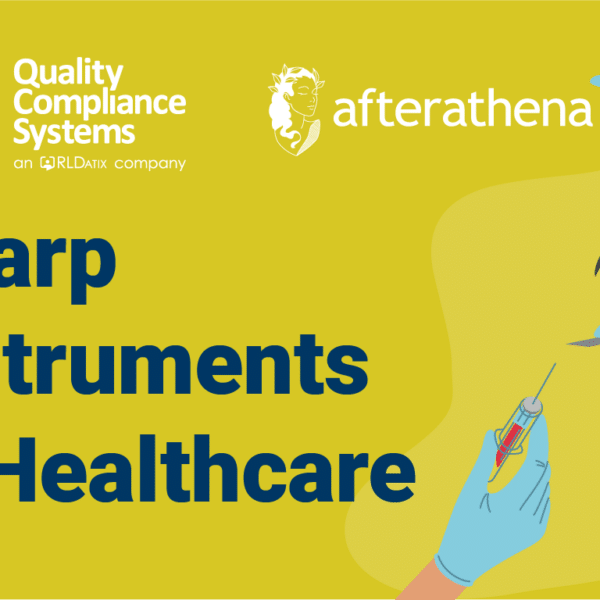
Sharps can include many instruments within a healthcare setting such as needles, canulae, scissors, blades, scalpels and knives. Are you looking at these hazards holistically, they are just one of many hazards to be included in your health and safety management system. Are they included within your health and safety policy arrangements, your risk assessments, your safety procedures, occupational health arrangements including any policies you have on immunisation, your training arrangements and your first aid needs assessment, to name but a few.
Those at risk from sharps are not only those who may be using them but those who unintentionally come into contact with sharps, such as if they are incorrectly disposed of. A typical injury from a sharp would be a puncture or small laceration. However, the consequences are far greater. Injury from sharp instruments is the most common cause of occupational exposure to blood-borne viruses in healthcare work. A sharp instrument, contaminated with blood, could transmit any of 20 different diseases including hepatitis B, C and human immunodeficiency virus (HIV).
The duties to manage these hazards can be found in The Health and Safety (Sharp Instruments in Healthcare) Regulations 2013. These require that the main healthcare employer and their contractors (which includes consultants) must cooperate and share information to control the risks from sharps. It also states all relevant employers must also:
- Avoid the unnecessary use of sharps
- Use “safer sharps” where it is not reasonably practicable to avoid using them altogether – these are sharps which have features or mechanisms to prevent or reduce the risk of accidental injury, such as shields or covers that enclose needles after use
- Prevent the recapping of needles
- Display instructions for the safe disposal of medical sharps close to the work area along with a secure sharps container
- The emergency procedure to follow if a member of staff receives a sharps injury should also be displayed
- Raise awareness of sharps amongst staff by developing information in consultation with safety representatives
- Train your staff
- Record accident details and investigate
- Provide treatment and follow up to a sharps injury
- Periodically review procedures
The following checklist may help team leaders and managers to see if their sharps management policy is working. This list is not exhaustive and should be bespoke to your environment.
- No sharps left unprotected
- Sharps bins readily available, away from vulnerable people and children and close to the pint of use
- No recapping of needles
- Disposal of sharps information prominently displayed
- Emergency procedure to follow in the event of receiving a sharps injury prominently displayed
- Staff are clear about which sharps they use and when – ask them during your walk around
- Does your planned first aid response to sharps injuries cover all possible shifts
- Clear, documented training records readily available to demonstrate staff have been trained in your safe procedures for sharps
- Procurement are aware of the requirement to purchase safer sharps when they should be
- Where incidents have occurred managers have shared the incident and the action, they have taken to prevent recurrence
Filter Posts:

Health & Safety Podcast: The Asbestos Management Plan

Health and Safety Review – August 2024 – The duty to manage asbestos and the asbestos management plan (AMP)
Health & Safety Podcast: The Concept of Positive Risk Taking