
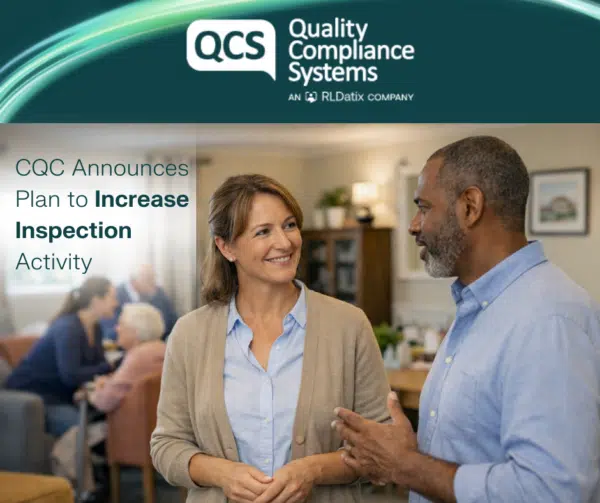
The latest board meeting from the Care Quality Commission on 11 March 2026 gives providers an important update on how regulation is changing and what to expect from future CQC inspections. One message stands out: Inspection activity is increasing, and expectations around evidence, governance and assurance remain high.
For many providers, this will feel familiar. Most of us can remember a time when a CQC inspector arrived on a day when everything was already stretched. With inspection numbers set to rise again, now is the moment to make sure your systems are strong, consistent and aligned with the Single Assessment Framework.
The QCS System is designed to help providers stay inspection-ready every day, and these changes make that support even more important.
Compliance Support through AI and Expert Guidance | QCS
A renewed focus on inspection
The CQC has been open about the challenges it has faced in recent years. Inspection activity reduced significantly following internal restructuring and the introduction of the Single Assessment Framework. The regulator is now working to rebuild its inspection programme and strengthen its presence across the sector.
A key initiative discussed at board level is the Return to Good programme. Its purpose is to improve regulatory effectiveness while increasing the number of inspections carried out.
One of the ways the CQC plans to achieve this is through shorter and more focused inspections.
Faster inspections with wider coverage
The CQC is currently testing a short report format as part of its Return to Good Test and Learn programme. The aim is to maintain regulatory quality while increasing inspection capacity.
These shorter inspections are designed to:
- Focus activity where improvement is needed
- Reduce unnecessary burden on providers
- Allow inspectors to visit more services
- Provide clearer and more targeted feedback
Early testing is exploring the assessment of around 18 quality statements, with reporting through a new short form inspection format. Inspectors involved in the trials have suggested that, if the model proves effective, teams could complete around one inspection per week.
If adopted nationally, this would significantly increase inspection numbers.
The CQC is also piloting AI tools to support inspection work. These include ambient voice technology to capture evidence during visits and AI systems, with a view to making inspections and report writing more efficient.
Taken together, these initiatives signal a clear direction. CQC inspection activity is rising, and providers should expect more frequent contact with the regulator.
How QCS supports providers through increased inspection activity
At QCS, we speak to providers every day who tell us the same thing. Inspections are not just about the day itself. They are about the systems, habits and culture that shape everyday practice. The QCS Operating System is designed to support that reality.
Whether the CQC assesses all 34 quality statements or a smaller selection through Test and Learn pilots, QCS gives teams the clarity and structure they need.
QCS provides:
- A complete suite of QCS Policies and Procedures aligned with the Single Assessment Framework
- QCS Mock Inspections that help test readiness and demonstrate effective governance
- Key audits requested by the regulator
- QCS Feedback Surveys for staff, people who use services and partners, all aligned with the Single Assessment framework.
- Lyra, our AI technology that gives staff instant, practical guidance based on your own policies
Our goal is simple. We help providers feel confident, supported and ready for inspection, even as regulatory activity increases.
Book a demo now