

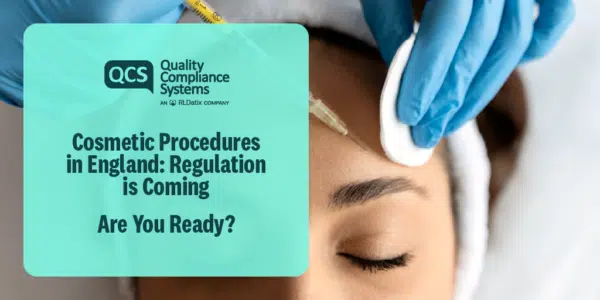
The aesthetic industry in England is on the brink of its biggest regulatory shift to date. Following growing concerns around patient safety and inconsistent standards, the government has set out plans to introduce a formal licensing framework for non-surgical cosmetic procedures. If you’re a practitioner, business owner, or stakeholder in the sector, the message is clear: legislation is coming – and now is the time to prepare.
Why Change Is Happening
Non-surgical cosmetic treatments such as fillers, anti-wrinkle injections, and laser procedures have surged in popularity. However, the sector has remained largely unregulated, leading to well-documented cases of poor practice and patient harm.
The government’s response is a move toward stronger oversight, improved safety, and clearer accountability across the industry.
What’s Being Proposed?
At the heart of the reform is a mandatory licensing system covering both:
- Practitioners – Anyone performing cosmetic procedures
- Premises – Any location where treatments take place
For most procedures, licensing is expected to be managed by local authorities, introducing a consistent layer of scrutiny across England.
A Risk-Based Approach: The “Traffic Light” System
A key feature of the proposal is a tiered framework that categorises procedures based on risk:
Green (Low Risk)
- Practitioners can operate independently under a licence
- Basic safety, hygiene, and training standards will apply
Amber (Medium Risk)
- Non-healthcare practitioners must be licensed and supervised by a regulated healthcare professional
- Healthcare professionals can perform these procedures independently Red (High Risk)
- Restricted to regulated healthcare professionals only
- Likely to take place in regulated clinical environments
This structure is designed to ensure that higher-risk procedures are performed only by appropriately qualified individuals in safe settings.
What the Government Has Committed To
The direction of travel is already clear. The government has committed to:
- Introducing a national licensing regime
- Prioritising regulation of high-risk procedures first
- Developing consistent national standards, including:
- Training and qualifications
- Hygiene and infection control
Insurance requirements
Moving toward a minimum age of 18 for cosmetic procedures
What’s Still Unclear
While the framework is taking shape, important details are still being worked out:
- Which procedures will fall into each risk category
- The exact licensing requirements for practitioners and premises
- Supervision rules for non-healthcare providers
- How the system will operate day to day
Further consultation and policy development are expected before the final model is confirmed.
How Will This Become Law?
The changes will be introduced using powers under the Health and Care Act 2022, through secondary legislation. This means:
- Draft regulations will be developed
- Parliament will review and approve them
- The system will be rolled out in phases
What Happens Next?
The roadmap includes:
- Additional consultation on the detailed design
- Drafting of regulations
- Parliamentary approval
- Gradual implementation of the licensing system
Why You Should Act Now
It may be tempting to wait until the final rules are published – but that would be a mistake. Regulation is no longer a question of if, but when. Those who prepare early will be in a far stronger position when licensing becomes mandatory.
Now is the time to:
- Review and formalise your policies and procedures
- Ensure your training and qualifications are up to date
- Strengthen your infection control and hygiene protocols
- Check your insurance coverage
- Document your clinical governance and safety processes
Early preparation not only reduces future disruption but also demonstrates professionalism and builds trust with clients.
Final Thought
The introduction of a risk-based licensing system marks a turning point for the cosmetic procedures industry in England. While details are still evolving, the direction is unmistakable: higher standards, tighter controls, and greater accountability.
Getting ready for regulation doesn’t have to be overwhelming. At QCS we offer practical support, including mock inspections, tailored policies and procedures and compliance audits to help you prepare with confidence.
Get in touch and start your free trial here!