

Strong Governance and Systems
True Drivers of Outstanding Care and Support
As I regularly visit the latest inspections data, I decided to do a deeper dive into the detail. The inspections data revealed a stark contrast in quality, culture, and outcomes. Three services were rated inadequate, while three were outstanding. The difference was not in the desire to deliver good care and support, or in the compassion of staff, the information showed it was in the systems, governance, and leadership frameworks that supported care and support delivery.
This analysis provides a clear lesson for providers across the sector. People do not just need good intentions, they need robust, effective systems and oversight to protect their safety, dignity, and wellbeing.
Where did things Go Wrong
Across the inadequate services, recurring patterns were appeared
Governance and Leadership Failures
Weak leadership and poor governance created services that were reactive, not proactive. Audits existed, but they failed to identify serious risks. Shortfalls were known but left unaddressed. Where improvements were made, they were not sustained. In these services, management was absent at weekends, unresponsive to feedback, and lacking strategic oversight, creating an environment where risk could thrive.
Risk and Safety Systems That Simply Don’t Work
Risk assessments were often incomplete, outdated, or lacking practical guidance. Staff were left without clear instructions on how to mitigate hazards, from fire safety to infection control, leading to preventable harm. Even when high-risk incidents occurred, reporting was delayed or inconsistent, undermining the organisation’s ability to learn and improve.
Fragmented Care and Support Planning
Care and support plans existed but were task-based rather than outcomes-focused. Guidance for staff was generic, and personalisation was inconsistent. Mental Capacity Act assessments were overlooked, and dignity, human rights, choice, and independence were not systematically embedded into daily routines.
Staffing and Skills Gaps
Even when staffing numbers met theoretical requirements, teams were insufficiently trained or supported. Competency checks were missing, and gaps in critical skills, from safe moving and handling to supporting eating and this compromised quality and safety. Leadership failed to recognise that staffing is not just a numbers game but a skills and supervision game.
Culture and Dignity Failures
Perhaps most concerning was the closed culture in these services. Staff were fearful or unsure of speaking up, family feedback was inconsistent, and environments were unequal across floors. Choice, independence, and dignity were inconsistently upheld, leaving service users vulnerable and often unheard.
What Outstanding Services Do Differently
The outstanding services were not perfect, but they demonstrated consistent, embedded excellence across every system:
- Governance was active, not passive, with audits driving real improvement and visible leadership reinforcing accountability.
- Risk systems were dynamic and person-centred, with service users actively involved in decisions about their own care and support.
- Care and support planning was tailored, co-produced, and outcome-focused, reflecting each individual’s sensory, cognitive, cultural and communication needs.
- Staff were well-trained, supported, and empowered, with clear oversight, structured supervision, and a culture of continuous learning.
- Culture was values-driven, with dignity, choice, and independence at the centre of care, not as optional extras.
These services illustrated a simple truth outstanding care and support is the product of strong systems, not chance or goodwill alone.
The Lessons for the Sector
Improvement from inadequate to outstanding is not about quick fixes. It requires a strategic, long term system-led approach
1.Governance – Establishing real oversight, live risk registers, and measurable KPIs. Leadership must be present, visible, and accountable.
2. Risk and Safety – Dynamic risk assessments, clear mitigation, and proactive incident reporting are non-negotiable.
3. Workforce Competence – Training, supervision, and competency checks turn staffing from a numbers issue into a quality issue.
4. Value-Led Culture – Open communication, responsive leadership, and a focus on dignity and independence build trust and engagement.
5. Audits Drive Improvement – Audits must do more than tick boxes, they should identify risks, drive actions, and measure impact.
In other words, the difference between inadequate and outstanding care and support is not in compassion, it is in the systems that turn compassion into consistent, measurable, high-quality outcomes.
Conclusion
Our sector is facing unprecedented scrutiny, but the path to excellence is clear. Strong governance, robust systems, skilled staff, and a values-driven culture are the foundations on which outstanding care and support is built.
Providers who invest in these areas will not only meet regulatory expectations but, more importantly, will provide safe, dignified, and empowering lives for the people they support.
Excellence is a system, not a coincidence.
How QCS can support Your Journey to Outstanding Care and Support
Achieving outstanding care and support is not a matter of chance, it is the result of embedding strong, effective systems that transform good intentions into consistent, high-quality outcomes. QCS is uniquely positioned to support providers throughout this journey by delivering a comprehensive digital platform that integrates governance, compliance, care and support planning, workforce development, and quality improvement into one accessible system.
With QCS, providers gain:
- Confidence in Compliance – Automatic updates ensure you remain inspection-ready and aligned with evolving regulatory standards.
- Efficiency in Operations – Centralised digital policies, rostering, and audit tools save time and reduce administrative burden.
- Empowered Teams – Training, supervision, and feedback modules foster a skilled, motivated workforce.
- Person-Centred Excellence – Innovative care and support planning and specialist resources enable truly personalised support.
- Continuous Improvement – Real-time data, audits, and stakeholder feedback drive measurable quality enhancements.
By partnering with QCS, health and social care providers can build the robust governance frameworks and dynamic systems essential to delivering safe, dignified, and empowering person-centred care. QCS is more than just a tool, it is your strategic partner in the relentless pursuit of excellence, helping your organisation move confidently to outstanding.
Filter Posts:
Why Strong Governance and Systems Are the True Drivers of Outstanding Care and Support


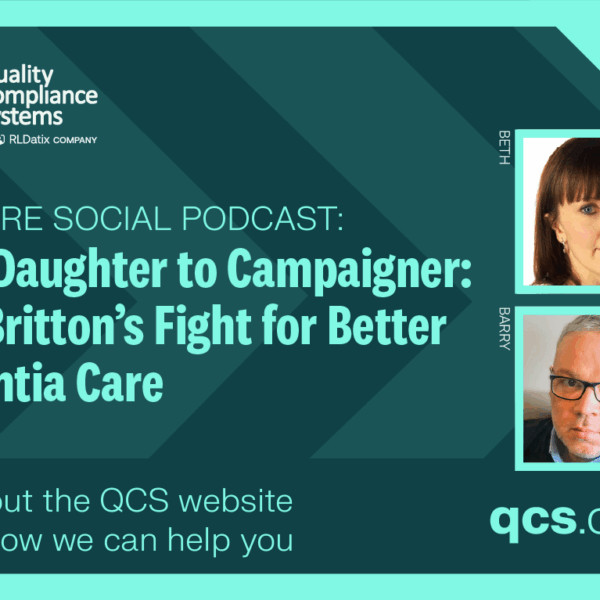
The Care Social Podcast Ep 20: From Daughter to Campaigner: Beth Britton’s Fight for Better Dementia Care

Dementia and Traumatic Experiences: Do These Memories Remain?

The Care Social Podcast Ep16: Jackie Pool on Changing The Way We Care for People Living with Dementia – Part 2
The Care Social Podcast Ep15: Jackie Pool on Changing The Way We Care for People Living with Dementia

The Value of Routines in Dementia Care