
Every day in adult social care, staff make decisions that shape people’s safety and wellbeing, often without being able to access the full picture of their health. GP practices are under pressure too, trying to meet rising demand with limited capacity. All too often, this compounds with busy care and support workers struggling to contact pressured GP practices to get critical information about a service user’s medication or medical history.
The Care Quality Commission’s latest State of Health Care and Adult Social Care report highlights that many people still struggle to access care when they need it, and the system around them remains fragmented. Where someone lives continues to influence their experience and outcomes, with those in more deprived areas more likely to encounter barriers and poorer health.
These challenges aren’t about a lack of commitment from staff, rather they reflect a broken system where vital information doesn’t always flow to the people who need it. Communication delays, duplication and incomplete records can all lead to increased risk, poorer decisions and avoidable escalation of care.
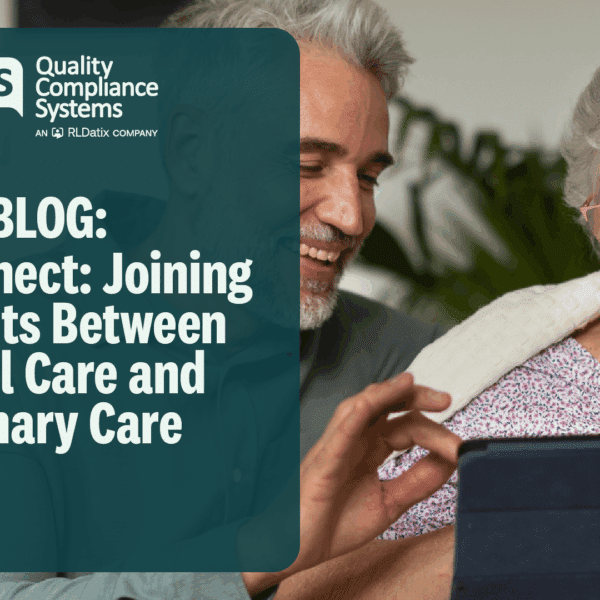
GP Connect, available through the QCS Care Management System, is designed to change that.
What is GP Connect and why does it matter now?
GP Connect is a national NHS England Digital service that allows authorised health and social care staff to view a person’s GP record in real time for direct care. It securely connects to the GP practice system, meaning no waiting for printouts or relying on service users or their loved ones to remember important details. When someone needs help, care and support staff can see allergies, medications, diagnoses and recent GP interactions instantly, giving a much clearer and safer picture.
This is especially valuable in social care settings, where missed or delayed information can significantly affect a person’s health. The CQC report highlights that access to timely care and support is still falling short for many. GP Connect supports the people who provide everyday care to act faster and with more confidence.
Better Access, Fewer Delays
When social care staff can check current medication or view the latest GP notes, they are more empowered to support service users, offer reassurance and prevent crises. This helps reduce avoidable A&E attendance caused by uncertainty or delayed advice.
For GP practices, GP Connect cuts down on repeated requests for information and helps prevent unnecessary appointments created simply because another professional lacked visibility of the GP record. It allows time and expertise to be used where they are most needed.
Stronger Integration and Smoother Transitions
Integration is often talked about but more difficult to deliver in practice, but now GP Connect helps turn the ambition into reality. When a person leaves hospital, moves into a residential service or receives a new package of support, the receiving team can immediately see up-to-date clinical information that supports care and support from day one.
The CQC report is clear that too many people face disjointed services, having to repeat their story or fill the gaps when services don’t communicate. GP Connect removes that burden, helping create a shared understanding of needs across teams. This not only supports the person receiving a service, it enables safer decisions, stronger partnership working and fewer surprises.
Tackling Inequalities Through Better Information
Health inequality is a persistent issue. The CQC warns that people in deprived areas continue to face the greatest barriers. However, GP Connect can help address this by ensuring that:
- People who rely more on social care are not disadvantaged by the setting they’re in
- Social care staff and nurses have equal access to vital medical information
- Proactive care and support is possible, not just reactive responses to emergencies
When information is shared fairly, services can be delivered more fairly. GP Connect supports a shift towards preventative, community-based support that benefits those most at risk of poor outcomes.
What needs to happen next?
Many GP systems are already enabled and QCS Care Management System has the GP Connect functionality enabled, which is available at no additional cost to our customers.
What’s needed now is for organisations to take the final steps:
- Adult social care providers must have a compliant digital care record, valid Data Security and Protection Toolkit (DSPT) submission and agreement to the national data sharing arrangements
- GP practices need to ensure their GP Connect settings are active and work locally with partners on safe, clear workflows
This isn’t a major transformation project — it’s a practical upgrade to how teams already work together.
The CQC has made it clear: care and support must become more connected, more equitable, and easier to access. GP Connect is a real, actionable step that adult social care and GP providers can take now to make care safer and fairer.
The question isn’t whether we need this — it’s how quickly we make it the norm.
If you would like a demo, please visit our website to find out more and to book a demo.
Filter Posts:

Supporting a Person living with Dementia Who Reverts to a Former Language


Updated Employer’s Guidance published on Statutory Neonatal Care Leave and Pay


Back to the Future: What CQC’s 2025 Consultation Means for Social Care Providers